Transparency
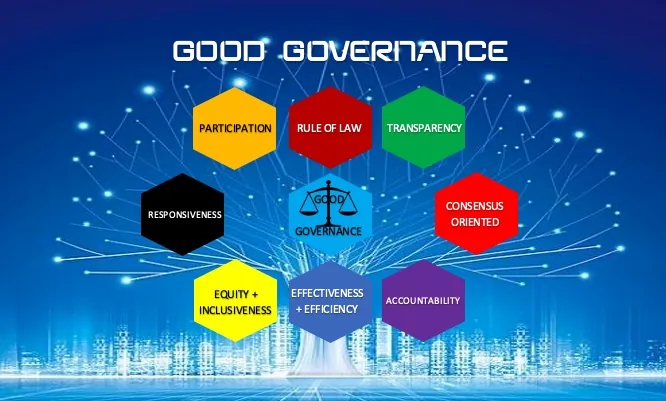
Government must operate in the open. Decisions, deliberations, budgets, contracts, and the reasoning behind policy choices must be accessible to the public. Transparency is the precondition for all other forms of accountability — you cannot hold a government responsible for what it does if you cannot see what it is doing. As James Madison wrote, a popular government without popular information is but a prologue to a farce or a tragedy.
Accountability
Elected officials and public servants must answer for their decisions and their performance. Accountability means that power comes with consequences — that those who govern poorly, act unethically, or betray the public trust face real penalties: electoral defeat, legal sanction, or public censure. Accountability does not function without engaged citizens who are paying attention, asking questions, and insisting on answers.
Representation
Government must genuinely represent the communities it serves — in its composition, its priorities, and its decision-making. Representation is not just about who gets elected. It is about whose voices are heard in the process, whose interests are reflected in the outcomes, and whether the full diversity of a community has meaningful access to the institutions that govern it. Government of the people, by the people, and for the people — or it is not democracy.
Fiscal Integrity
Public resources must be managed with honesty, competence, and a clear sense of purpose. Fiscal integrity means that budgets reflect genuine public priorities, that spending is tracked and reported openly, that waste and corruption are actively resisted, and that the long-term financial health of the community is weighed alongside short-term political pressures. The budget is the most honest document a government produces — it shows you, in numbers, what a government actually values.
Rule of Law
Government must operate within the law and apply the law equally. No person, institution, or political faction is above the legal framework that governs public life. The rule of law means that legal protections apply to everyone, that legal obligations are enforced consistently, and that justice is not for sale or selectively applied. When the rule of law erodes, democracy begins to hollow out from within.
Civic Access
Good governance actively makes participation easy — not difficult — for every citizen. Voting must be accessible. Public meetings must be open and held at times when working people can attend. Public records must be available without bureaucratic obstruction. The democratic process must be designed to include, not to exclude. A government that makes participation difficult is a government that prefers to operate without scrutiny.
Equal Justice
Every member of the community has equal standing before government and equal protection under it. Equal justice means that the law is applied the same way regardless of race, income, political connection, or social status. It means that the benefits of good governance and the burdens of public decisions are distributed fairly. Equal justice is not a finished achievement — it is an ongoing civic obligation that every generation must advance.
Checks and Balances
Power must be divided, limited, and checked. No single individual, branch, or institution should accumulate unchecked authority over public life. The separation of powers among legislative, executive, and judicial branches at every level of government is one of the most important structural innovations in the American democratic tradition — a system designed not to trust any single hand with too much power.
Free Press
Democracy requires an informed citizenry, and an informed citizenry requires a free, independent, and functioning press. Journalism that investigates, reports, and holds power accountable is essential democratic infrastructure — as American as the First Amendment that protects it. The erosion of local journalism is one of the most serious threats to democratic governance at the community level. When nobody covers the town board, power operates in the dark.
Ethical Leadership
Those who hold public office or public trust must conduct themselves with integrity. Ethical leadership means avoiding conflicts of interest, refusing corruption, being honest with constituents, and holding the public trust above personal gain. Public office is not a business opportunity — it is a responsibility. Corruption diverts public resources, distorts decision-making, and corrodes the public trust that democratic governance depends on.
Future Thinking
Good governance looks beyond the next election cycle. It makes decisions that reflect the long-term wellbeing of the community, even when those decisions are politically difficult in the short term. Infrastructure, environmental stewardship, fiscal sustainability, public health, education — these are areas where the costs of short-term thinking are paid by future generations who had no vote in the decisions that shaped their inheritance.
Responsiveness
Government must listen and respond to the people it serves. Responsiveness means that constituent concerns are heard, that public input is genuinely considered in decision-making, and that elected officials maintain real connections to the communities they represent — not just during election season, but every day they hold office. A government that is unresponsive to its constituents has lost touch with its fundamental purpose.